
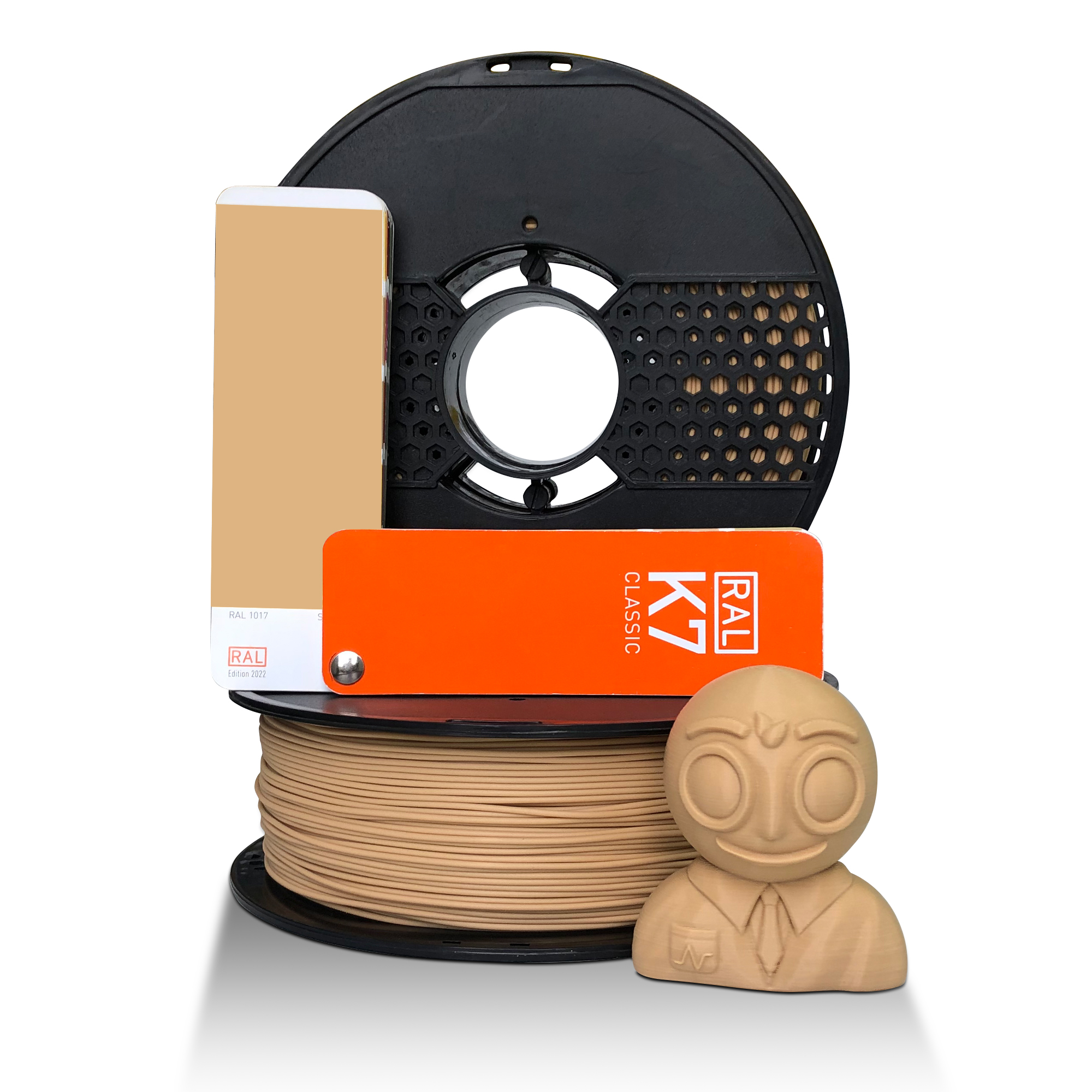
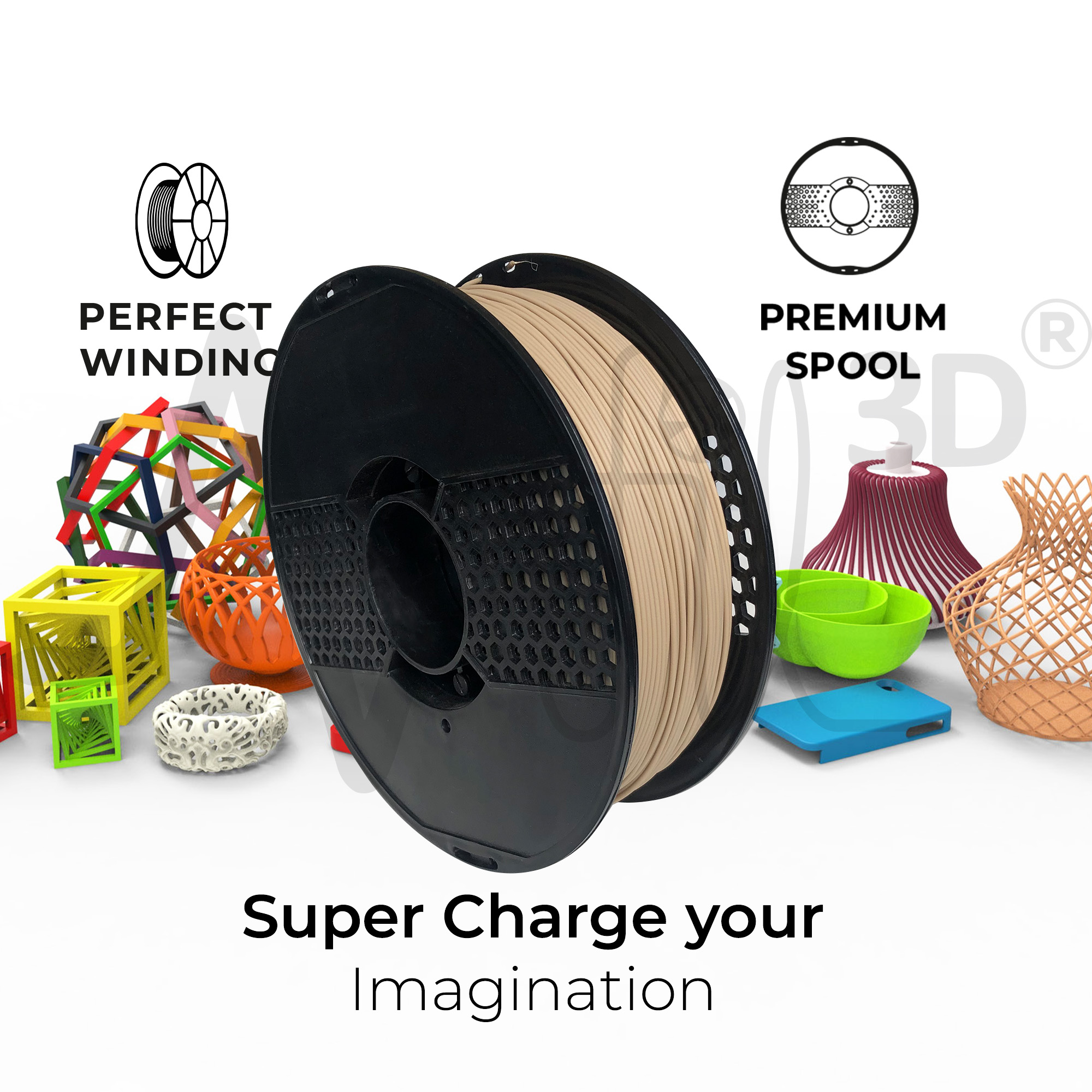

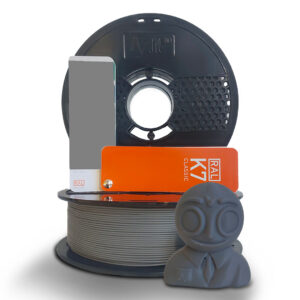
Turbo-Finish PLA+ Wood by NFIL3D is a premium 3D printer filament developed for makers, designers, engineers and hobbyists looking for a wood-inspired appearance, enhanced PLA+ strength and high-speed printing support. Its natural-looking colour concept makes it an attractive choice for decorative sculptures, architectural miniatures, rustic-style accessories, artistic objects and creative prototypes.
Formulated as part of NFIL3D’s Turbo-Finish PLA+ range, the filament is advertised to support printing speeds from 50mm/s to 750mm/s on suitably equipped FDM printers. Its nominal diameter of 1.75mm and advertised tolerance of ±0.015mm are intended to support consistent material feeding and extrusion.
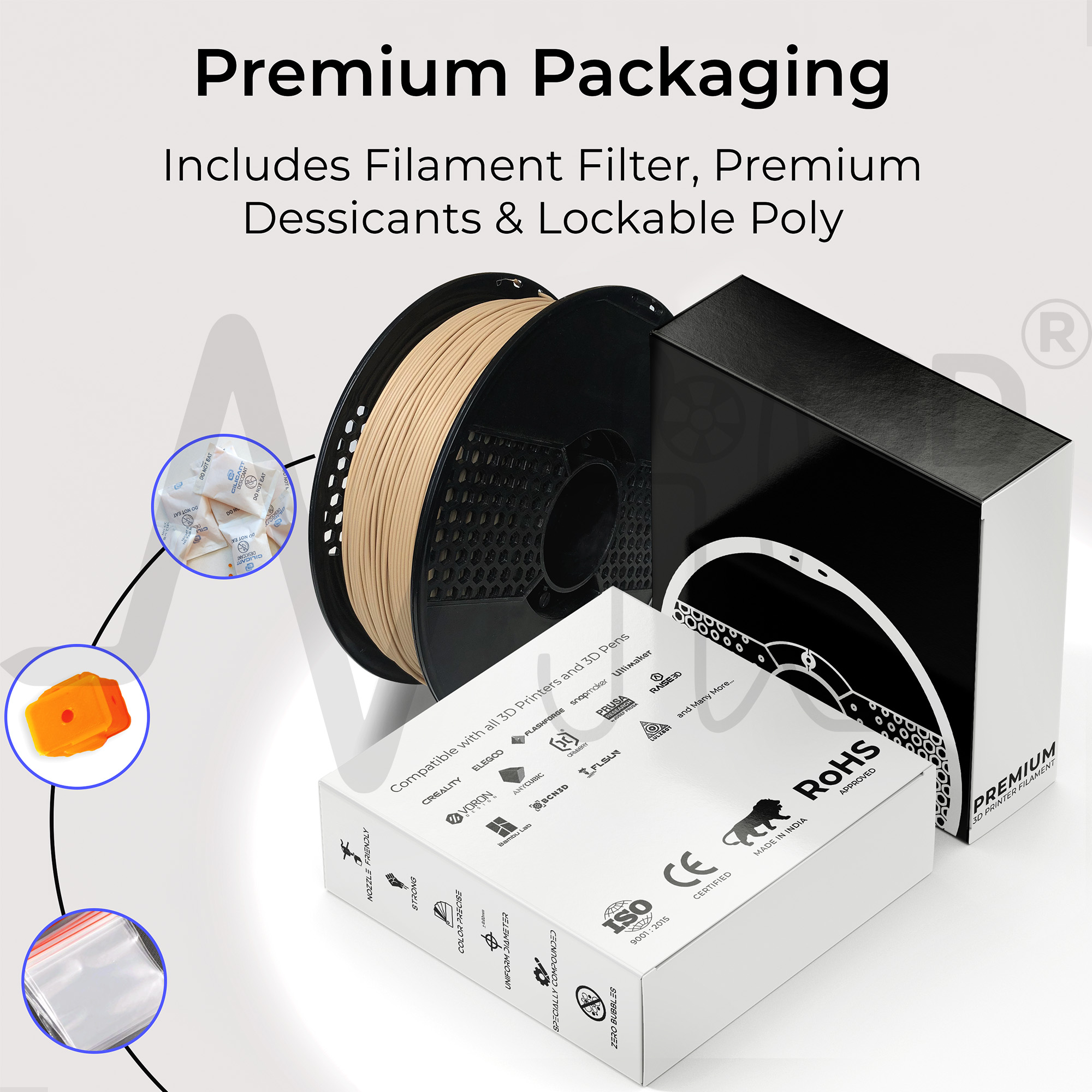
Each spool is specified with a full 1kg net weight of usable filament and includes two desiccants to help manage humidity exposure during storage.
Why Choose Turbo-Finish PLA+ Wood?
Turbo-Finish PLA+ Wood combines the appearance of a wood-inspired colour with the flexibility of a PLA+ filament designed for faster 3D printing workflows.
Wood-themed designs often benefit from warm, natural-looking colours. This makes the filament useful for architectural presentation pieces, miniature furniture, artistic decorations and rustic-inspired accessories.
Unlike conventional brown filament selected only for its basic colour, the Wood variant is intended for projects where a natural material-inspired aesthetic is part of the design.
The Turbo-Finish formulation is marketed for both conventional printing and higher-speed applications on compatible FDM printers.
Its enhanced PLA+ formulation is intended to offer higher strength than regular PLA, while consistent filament dimensions help support predictable extrusion.
The name Wood describes the product variant. Actual wood-particle content, wood-fibre percentage and special composite properties should be confirmed separately from the manufacturer’s technical documentation.
NFIL3D draws on more than 30 years of experience in polymer raw materials, additives and processing to support its filament development and manufacturing approach.
Key Features of Turbo-Finish PLA+ Wood
1. High-Speed Printing Support – 50mm/s to 750mm/s
A major advertised feature of Turbo-Finish PLA+ Wood is its printing-speed support range of 50mm/s to 750mm/s.
This broad range provides flexibility for both standard FDM printing and faster printing workflows using compatible equipment.
Faster printing may reduce the production time required for suitable architectural models, decorative objects and repeated prototype components.
However, the advertised maximum speed of 750mm/s is not a guarantee that every 3D printer can achieve reliable printing at that speed.
Actual printing performance depends on printer acceleration, motion-system design, extruder capability, hotend melting capacity, nozzle diameter, volumetric flow rate, cooling and model geometry.
Smaller details, bridges, overhangs and visible external surfaces often require lower speeds for acceptable print quality.
Begin with a suitable PLA+ profile and gradually increase speed after testing extrusion, surface quality and layer bonding.
2. Wood-Inspired Colour for Creative Designs
Turbo-Finish PLA+ Wood is intended for projects requiring a wood-inspired visual appearance.
This makes it suitable for natural-themed decorative objects, miniature furniture, architectural models, rustic-style signs and artistic sculptures.
The colour concept can complement white, beige, green, black and other neutral tones in multi-part 3D printed assemblies.
Wood-themed objects can be useful when designing miniature interiors, small display accessories and nature-inspired models.
NFIL3D emphasizes consistent colour formulation to support uniform material appearance.
The exact printed shade and surface sheen may vary depending on printing temperature, layer height, speed and lighting.
The Wood variant name does not independently establish that the filament contains actual wood powder, natural fibres or wood-based additives.
3. Enhanced Strength Compared with Regular PLA
Turbo-Finish PLA+ Wood uses an enhanced PLA+ formulation intended to provide higher strength than conventional PLA.
This makes it useful for selected decorative components, lightweight accessories, non-critical prototype parts and miniature models.
Its formulation is designed to offer practical handling durability while maintaining familiar PLA-based printing characteristics.
However, the mechanical strength of a completed printed object depends on wall thickness, infill density, print orientation, layer bonding and geometry.
If the filament contains special fillers, their effect on mechanical properties should be evaluated using the manufacturer’s technical data.
At high printing speeds, insufficient melting or extrusion flow can also affect layer bonding.
Components intended for heavy loads, prolonged heat exposure or safety-critical uses should be tested before use.
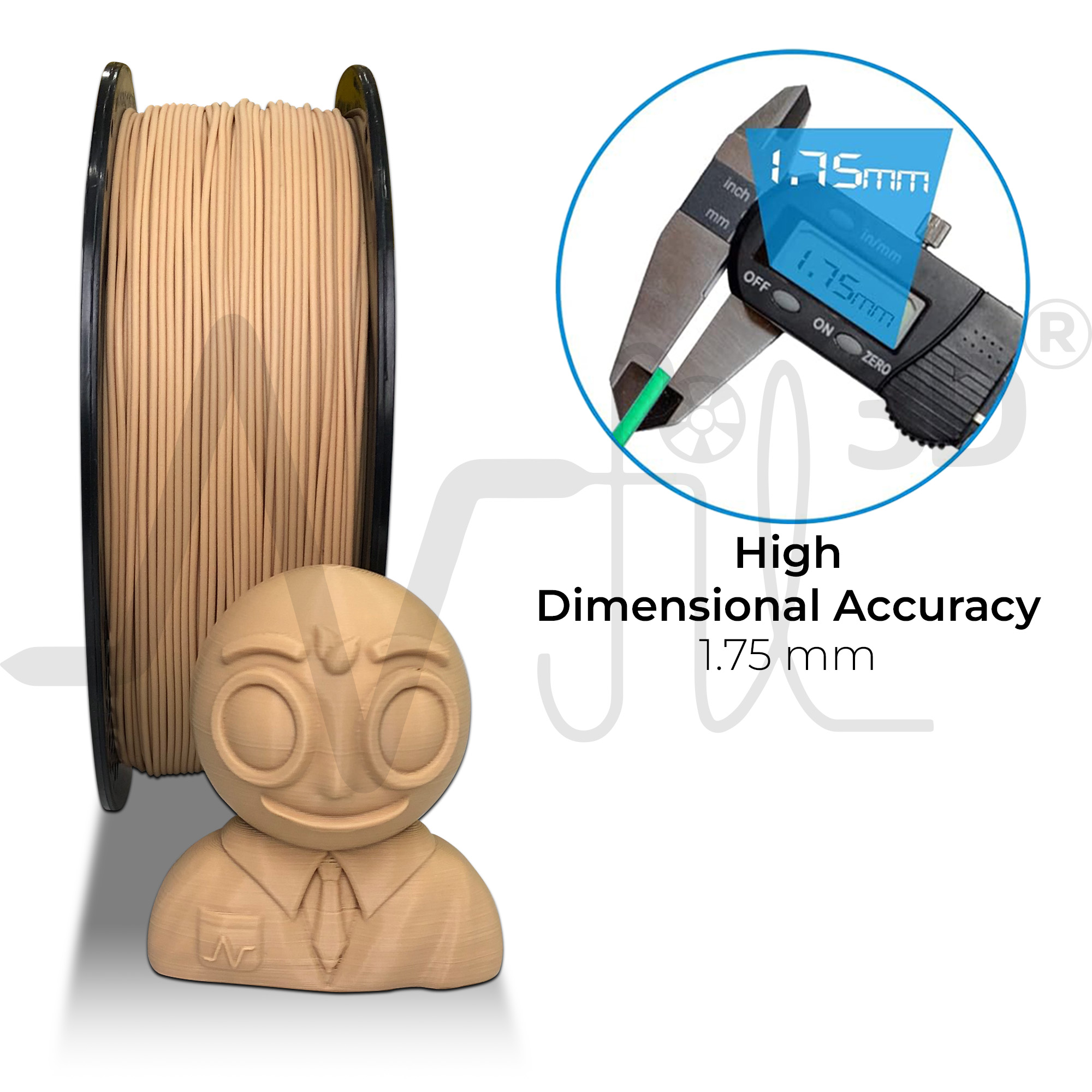
4. Precision 1.75mm Diameter with ±0.015mm Tolerance
Turbo-Finish PLA+ Wood features a nominal filament diameter of 1.75mm and an advertised dimensional tolerance of ±0.015mm.
Consistent filament diameter is important because slicing software calculates material delivery based on the configured filament dimensions.
Significant variation in thickness can lead to under-extrusion, over-extrusion, irregular layer widths and surface defects.
NFIL3D emphasizes dimensional control as part of its filament manufacturing approach.
The advertised tolerance is intended to support predictable material feeding through properly calibrated extruders.
This measurement refers to the filament’s diameter, not a guarantee of ±0.015mm dimensional accuracy in finished 3D printed objects.
5. Consistent Extrusion Through Compatible FDM Printers
Turbo-Finish PLA+ Wood is designed for processing through compatible FDM and FFF printer extrusion systems accepting 1.75mm PLA-based filament.
A clean nozzle, correctly calibrated extruder and suitable operating temperature help maintain dependable material flow.
At higher print speeds, the hotend must melt enough material to satisfy the requested volumetric flow rate.
If the material-flow demand exceeds the hotend’s capacity, the printer may produce under-extrusion, gaps or poor layer bonding.
If the manufacturer’s technical documentation identifies actual wood particles or other fillers, users should follow the specific nozzle-size and wear recommendations for that composition.
Select printing settings according to the material’s verified technical specifications and actual printer capabilities.
6. Moisture Management with Two Desiccants
Turbo-Finish PLA+ Wood is supplied with two desiccants intended to help reduce humidity exposure during storage.
PLA-based materials can absorb moisture from the surrounding environment over time.
Excessive moisture can contribute to stringing, bubbling, rough printed surfaces and inconsistent extrusion.
The included desiccants help maintain suitable storage conditions but do not guarantee permanently moisture-free filament.
After opening the spool, store unused filament in an airtight container or sealed protective bag with suitable desiccant.
For more information, see the Prusa Filament Drying and Storage Guide.
7. Full 1kg Net Weight of Filament
Each spool of Turbo-Finish PLA+ Wood is specified to contain a full 1kg net weight of usable 3D printing filament.
Net weight refers to the filament itself and excludes the empty spool and outer packaging.
This quantity provides material for a variety of decorative projects, architectural miniatures and prototype models.
Users can estimate filament consumption using their slicing software before starting a print.
Actual material usage depends on model dimensions, walls, infill percentage and support structures.
8. Consistent Wood-Inspired Appearance
Colour consistency is valuable when producing matching components for a miniature model, decorative collection or product presentation.
NFIL3D emphasizes controlled colour formulation to support consistent appearance across its filament products.
Turbo-Finish PLA+ Wood can be used for matching miniature furniture, architectural elements, decorative ornaments and rustic-inspired accessories.
Maintaining similar nozzle temperatures, layer heights and outer-wall speeds between printing sessions may help reduce visible variations.
9. Backed by 30+ Years of Polymer Expertise
NFIL3D draws on more than 30 years of experience in polymer raw materials, additives and material processing.
This background supports the brand’s attention to material formulation, filament dimensions and manufacturing consistency.
The Turbo-Finish Wood variant combines this material experience with a distinctive visual concept and manufacturer-advertised high-speed printing support.
Applications of Turbo-Finish PLA+ Wood
Miniature Furniture and Interior Design Models
Turbo-Finish PLA+ Wood is suitable for miniature chairs, tables, shelves, cabinets and scaled furniture designs.
The wood-inspired appearance makes it an appealing material for architectural interiors and model-room presentations.
Architectural Models and Rustic Structures
Create miniature cabins, decorative facades, model bridges, architectural details and presentation structures.
The natural-looking colour theme can complement landscape models and miniature environments.
Decorative Sculptures and Home Accessories
Print nature-inspired sculptures, geometric ornaments, display objects, decorative holders and rustic-style accessories.
Personalized Gifts and Creative Crafts
Produce customized nameplates, display signs, keepsakes, ornaments and decorative gifts.
Educational and STEM Projects
Create geometry demonstrations, architectural learning models, design exercises and classroom teaching aids.
Product Prototypes and Presentation Samples
Produce appearance prototypes, concept objects, decorative covers and non-critical design components.
Compatible high-speed printers may help reduce production time for suitable shapes when adequate extrusion and cooling can be maintained.
Turbo-Finish PLA+ Wood Technical Specifications
| Parameter | Specification |
|---|---|
| Product Name | Turbo-Finish PLA+ Wood 1.75mm |
| Brand | NFIL3D |
| Material | Turbo-Finish PLA+ |
| Colour / Variant | Wood |
| Appearance | Wood-Inspired |
| Nominal Filament Diameter | 1.75mm |
| Advertised Diameter Tolerance | ±0.015mm |
| Advertised Printing-Speed Support | 50–750mm/s, printer-dependent |
| Specified Net Filament Weight | 1kg |
| Strength | Enhanced Compared with Regular PLA |
| Included Desiccants | 2 |
| Printing Technology | FDM / FFF |
| Wood-Particle Content | Not specified in available product information |
| Applications | Miniature Furniture, Architecture, Decor and Prototypes |
Recommended Printing Settings for Turbo-Finish PLA+ Wood
For reliable results with Turbo-Finish PLA+ Wood, begin with a suitable PLA+ profile and follow the NFIL3D technical data sheet or packaging recommendations.
Nozzle Temperature: Use the manufacturer-recommended range and adjust according to extrusion quality.
Bed Temperature: Select a suitable heated-bed setting and keep the print surface clean.
Nozzle Diameter: Follow the manufacturer’s material-specific guidance. If the product contains actual wood particles, a larger nozzle may be recommended to reduce clogging risk.
Layer Height: A 0.20mm layer height is a useful starting point, provided it is compatible with the chosen nozzle and material composition.
Printing Speed: Begin with a reliable printer-supported speed and increase only after checking extrusion and layer bonding.
Outer-Wall Speed: Use controlled speeds for visible decorative surfaces.
Maximum Volumetric Flow: Ensure the hotend can supply enough molten material for the chosen line width, layer height and printing speed.
Part Cooling: Adjust cooling according to bridges, overhangs and model geometry.
Storage: Keep unused material sealed with suitable desiccant.
Understanding High-Speed Printing and Material Flow
For Turbo-Finish PLA+ Wood, the printer must be capable of melting and extruding material at the rate required by the selected speed.
The simplified formula is:
Required Volumetric Flow = Line Width × Layer Height × Actual Printing Speed
For example, assuming a 0.45mm line width and a 0.20mm layer height:
| Actual Printing Speed | Theoretical Required Flow |
|---|---|
| 100mm/s | 9mm³/s |
| 200mm/s | 18mm³/s |
| 300mm/s | 27mm³/s |
| 500mm/s | 45mm³/s |
| 750mm/s | 67.5mm³/s |
These figures illustrate theoretical material demand, not verified performance of the filament or a particular printer.
The correct line width and nozzle must be selected according to the actual material composition.
A printer may also be unable to reach its configured maximum speed because of acceleration limits and short toolpaths.
Tips for Better Wood-Inspired Prints
For attractive results with Turbo-Finish PLA+ Wood, begin with a small test print to evaluate the colour, extrusion behaviour and surface finish.
For miniature furniture and architectural models, use suitable print orientation to minimize support marks on visible surfaces.
Consider appropriate layer heights for detailed decorative features and curved surfaces.
Maintain consistent outer-wall speeds to help achieve uniform-looking surfaces.
If the product is confirmed to contain wood particles, follow the manufacturer’s nozzle-size and maintenance recommendations.
Do not assume that every wood-coloured PLA+ filament requires a special nozzle; the requirement depends on its actual formulation.
When increasing printing speed, monitor for under-extrusion, weak layer bonding, ringing and poor cooling.
If extrusion demand exceeds hotend capacity, reduce the speed or adjust settings within the recommended operating range.
Keep the print surface clean and verify first-layer adhesion before starting larger objects.
Store unused filament in a sealed container with suitable desiccant.
Frequently Asked Questions
Is Turbo-Finish PLA+ Wood made with real wood particles?
The available product listing identifies the material as Turbo-Finish PLA+ Wood but does not specify a wood-particle percentage. Confirm the composition through the manufacturer’s technical data sheet before describing it as wood-filled filament.
Can Turbo-Finish PLA+ Wood print at 750mm/s?
The material is advertised for speeds up to 750mm/s, but actual achievable speed depends on printer hardware, material flow, cooling and model geometry.
Is it suitable for standard 1.75mm FDM printers?
The filament is intended for compatible FDM and FFF printers accepting 1.75mm PLA-based material. Material-specific nozzle requirements should be checked separately.
Is the filament stronger than regular PLA?
Its enhanced PLA+ formulation is marketed for higher strength than regular PLA. Actual finished-part strength depends on printing conditions and the material’s formulation.
Does the product contain 1kg net filament?
The product specification states 1kg net weight of usable filament, excluding spool and packaging.
What is the advertised diameter tolerance?
The specified filament diameter tolerance is ±0.015mm around the nominal 1.75mm diameter.
Buy Turbo-Finish PLA+ Wood at NFIL3D
Turbo-Finish PLA+ Wood offers a wood-inspired visual appearance combined with enhanced PLA+ formulation, controlled filament dimensions and advertised high-speed printing support.
Its nominal 1.75mm diameter, advertised ±0.015mm tolerance, specified full 1kg net filament weight and two included desiccants make it a practical option for compatible FDM printing projects.
Whether you are creating miniature furniture, architectural models, decorative accessories, personalized gifts or creative prototypes, the Wood variant offers a natural-looking design direction.
Explore the NFIL3D Turbo-Finish PLA+ Collection to discover more colours and variants.
Visit the NFIL3D Store to browse filaments, 3D printers and accessories.


