

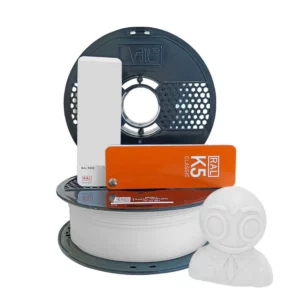
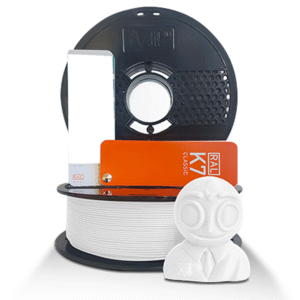
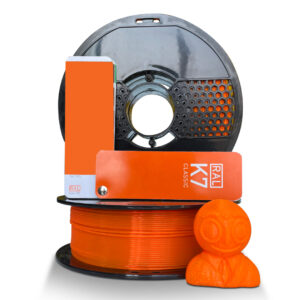
NFIL3D rPLA Filament is a recycled PLA-based 3D printer filament designed for makers, students, designers, educators and hobbyists who want to explore material reuse while creating detailed 3D printed objects. This filament is manufactured using recovered PLA material and is intended for compatible FDM and FFF 3D printers.
Featuring a nominal 1.75mm diameter, an advertised ±0.015mm filament diameter tolerance and 1kg net filament weight, NFIL3D rPLA provides material for everyday printing projects, prototypes, educational models, decorative items and creative designs.
The product has an advertised 1.6kg total packaged weight, including a 1,000g filament supply, approximately 250g empty spool and approximately 350g packaging.
Available in multiple colour variants, this recycled PLA filament offers a practical choice for users who want to experiment with 3D printing while supporting the reuse of suitable polymer material.
Why Choose NFIL3D rPLA Filament?
NFIL3D rPLA Filament offers an alternative to conventional virgin PLA filament by using recovered PLA material as part of its production process.
Material reuse can help reduce the need for virgin polymer feedstock. However, the environmental impact of a filament depends on its manufacturing process, recycled content, transportation, packaging and disposal.
Recycled PLA is not automatically biodegradable in ordinary outdoor conditions, and its use does not make a printed object environmentally harmless.
For users producing prototypes, decorative parts and classroom projects, rPLA can be a useful material option when the selected grade offers suitable processing performance.
The filament is designed for printers accepting standard 1.75mm PLA-type material, subject to the manufacturer’s processing instructions.
Key Features and Benefits of NFIL3D rPLA Filament
1. Made Using Recovered PLA Material
The defining feature of NFIL3D rPLA Filament is its recycled PLA formulation.
PLA waste can be collected, processed and reused as feedstock for filament manufacturing when the material is suitable for recovery.
This helps create another use for existing PLA material instead of relying exclusively on newly produced polymer.
The precise percentage of recycled content has not been established from the available product details.
Therefore, users should not assume the filament contains 100% recycled PLA unless NFIL3D provides supporting documentation.
2. Nominal 1.75mm Filament Diameter
NFIL3D rPLA Filament has an advertised diameter of 1.75mm.
This standard size is used by many desktop FDM and FFF 3D printers.
The filament must be matched with the printer’s extruder and hotend specifications.
Users should configure the correct filament diameter in their slicing software.
Printers designed for other filament diameters may not accept this material.
3. Advertised ±0.015mm Diameter Tolerance
NFIL3D specifies a filament diameter tolerance of ±0.015mm.
Diameter consistency is important because slicers calculate extrusion volume using the configured filament diameter.
Unexpected filament thickness variations may influence material flow, printed walls and surface appearance.
The advertised tolerance describes the filament’s diameter variation.
It is not a guarantee that finished 3D printed parts will achieve ±0.015mm dimensional accuracy.
Printed-part accuracy also depends on machine calibration, extrusion settings, layer height, cooling and material shrinkage.
4. Full 1kg Net Filament Weight
Each NFIL3D rPLA Filament spool is specified to contain 1,000g of net filament.
This means the filament weight does not include the empty spool or external packaging.
A full kilogram provides material for a variety of printing projects, although the number of prints depends on model size, wall thickness, infill and support requirements.
Customers should distinguish the amount of printable material from the total shipping weight.
5. Approximately 1.6kg Packaged Weight
The product title specifies the following weight breakdown:
| Component | Advertised Weight |
|---|---|
| Net 3D Printer Filament | 1,000g |
| Empty Spool | 250g |
| Packaging | 350g |
| Total Packaged Weight | 1,600g |
The total packaged weight includes non-filament components.
NFIL3D rPLA Filament is a 1kg net filament product, not a 1.6kg net filament spool.
6. Multiple Colour Options
The NFIL3D recycled PLA product is offered in multiple colour variants.
Available options listed on the product page include Blue, Midnight Grey, Natural White, Raven Black, Red, Skin, Snow White and Yellow.
Different colours can be selected for miniature models, functional-design concepts, geometric objects and decorative prints.
Colour appearance may vary slightly due to lighting, print temperature, material batches and monitor settings.
Customers should select the desired colour variant before placing an order.
7. Designed for FDM and FFF Printing
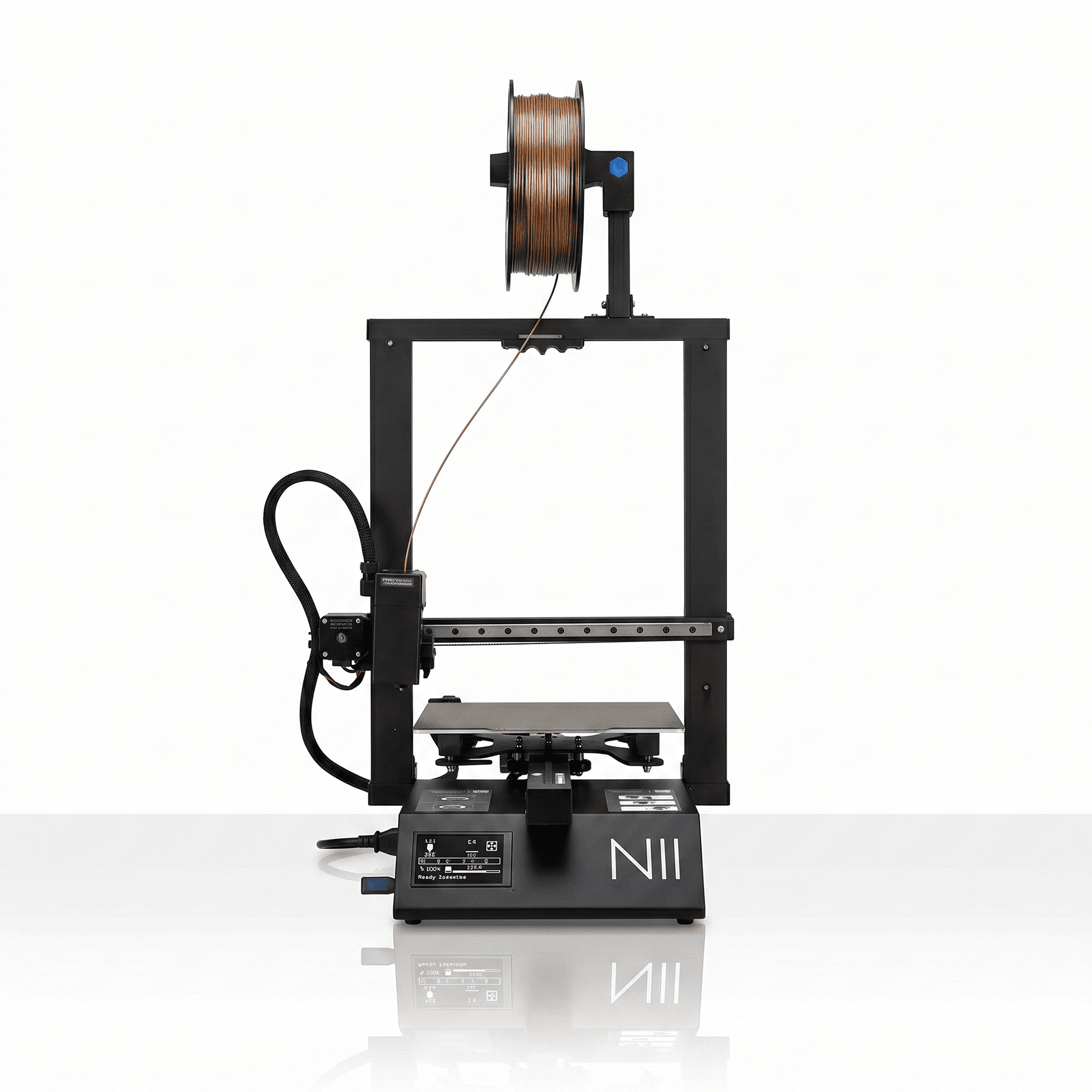
NFIL3D rPLA Filament is intended for extrusion-based 3D printing.
In FDM printing, the printer feeds filament through a heated hotend and deposits softened material layer by layer.
After cooling, the deposited layers form a three-dimensional object.
The recycled PLA formulation may require some tuning compared with the printer’s default PLA profile.
Start with the manufacturer’s recommended settings and use a calibration print before beginning a large project.
8. Suitable for Prototyping
The material can be used for concept models, design mock-ups and suitable prototypes.
Examples include demonstration housings, decorative cases, fit-check components and architectural concepts.
Prototype suitability depends on the selected colour grade, printed design and required mechanical properties.
Avoid assuming recycled PLA has identical strength or thermal performance to every conventional PLA filament.
9. Creative and Decorative Printing
NFIL3D rPLA Filament is suitable for suitable artistic models, decorative objects and general 3D printing projects.
Users may create figurines, miniature structures, desk accessories, nameplates and customised decorations.
The selected layer height, nozzle diameter and printing temperature affect fine-detail reproduction and surface finish.
10. Educational and Learning Projects
Recycled PLA filament can be useful for supervised educational projects involving CAD modelling, 3D printing and materials reuse.
Students can explore how a digital design is converted into physical layers.
The material also provides opportunities to discuss recycling, manufacturing and responsible material consumption.
11. Dry Storage and Filament Handling
NFIL3D rPLA Filament should be protected from excessive moisture and contamination.
Like other thermoplastic filaments, inappropriate storage can affect printing performance.
Moisture-related defects may include stringing, bubbles and inconsistent extrusion.
Keep the spool in a sealed container or suitable dry storage bag when not in use.
12. Suitable for Everyday PLA-Type Printing Projects
The filament can be considered for general-purpose printing projects where a compatible recycled PLA grade provides appropriate properties.
Use it for models, decorative prints and suitable low-stress prototype components.
PLA-based materials are generally not the best choice for high-temperature applications, prolonged outdoor exposure or heavily loaded mechanical parts without specific validation.
Applications of NFIL3D rPLA Filament
Product Prototypes
Use NFIL3D rPLA Filament to create suitable visual prototypes, concept designs and demonstration models.
Educational Models
Print geometric objects, classroom models and suitable science or engineering demonstrations.
Decorative Home Accessories
Create display ornaments, desk organisers, decorative lettering and personalised nameplates.
Architectural Models
Produce miniature buildings, presentation models and detailed architectural components.
Miniatures and Figurines
NFIL3D rPLA Filament can be used for figurines, decorative statues and suitable hobby models.
CAD Design Practice
Print calibration models and design exercises to evaluate dimensions, orientation and surface detail.
Functional-Design Concepts
Produce non-critical fit-check components and mechanical appearance prototypes.
For load-bearing or heat-exposed applications, verify the exact material’s suitability.
NFIL3D rPLA Filament Technical Specifications
| Specification | Details |
|---|---|
| Brand | NFIL3D |
| Material | rPLA – Recycled PLA |
| Printing Technology | FDM / FFF |
| Nominal Diameter | 1.75mm |
| Advertised Diameter Tolerance | ±0.015mm |
| Net Filament Weight | 1kg / 1,000g |
| Advertised Empty Spool Weight | 250g |
| Advertised Packaging Weight | 350g |
| Total Packaged Weight | 1.6kg / 1,600g |
| Colours | Blue, Midnight Grey, Natural White, Raven Black, Red, Skin, Snow White, Yellow |
| Recycled Content Percentage | Not specified |
| Filament Compatibility | Suitable printers supporting 1.75mm PLA-type materials |
| Recommended Nozzle Temperature | Refer to product-specific settings |
| Recommended Bed Temperature | Refer to product-specific settings |
| Recommended Use | Prototypes, Models, Decorative Prints and Educational Projects |
Recommended Printing Settings for NFIL3D rPLA Filament
The following temperatures and settings are general PLA starting points rather than independently validated settings for every colour of the NFIL3D recycled PLA formulation.
Nozzle Temperature: Approximately 190–220°C
Begin with a suitable PLA profile and use a small temperature calibration model if needed.
The ideal temperature depends on the filament grade, print speed and printer hotend.
Too low a temperature can produce inconsistent extrusion or weak interlayer bonding.
Excessive temperature can contribute to stringing, oozing and surface defects.
Heated Bed: Approximately 50–60°C
Many PLA-type materials print well on a moderately heated build plate.
The precise temperature depends on the bed surface and first-layer calibration.
Some printers and surfaces may use different settings.
Layer Height: 0.20mm Starting Point
For a standard 0.4mm nozzle, a 0.20mm layer height is a practical starting option.
Smaller layer heights may be selected for detailed models.
Larger layers can be useful where print speed and appearance requirements permit them.
Printing Speed: Start Conservatively
Use the printer’s normal PLA profile as a starting point.
Adjust print speed according to extrusion consistency, cooling capability and print quality.
A specific maximum speed has not been verified for this rPLA product.
Cooling Fan
PLA-type materials often benefit from appropriate part cooling.
The amount of cooling required depends on the model geometry, first-layer adhesion and printer design.
Bed Adhesion
Use a clean, compatible build surface.
If corners lift from the bed, review first-layer calibration, bed cleanliness and cooling settings.
A brim can help improve adhesion for models with a small contact area.
Retraction
Calibrate retraction according to the printer’s extruder configuration.
Excessive retraction may increase filament feeding problems.
If stringing occurs, review temperature, material condition and retraction settings.
Storage
Store the filament in a cool, dry place away from direct sunlight and excessive heat.
Use appropriate sealed storage when the spool is not in use.
For general PLA printing guidance, read the Prusa PLA Material Guide.
How to Use NFIL3D rPLA Filament
Step 1: Select the Correct Colour
Choose the required colour variation for the intended project.
Step 2: Check Printer Compatibility
Confirm that the printer supports 1.75mm filament and suitable PLA printing temperatures.
Step 3: Prepare the Build Plate
Clean the build surface according to the printer manufacturer’s instructions.
Step 4: Load the Filament
Feed the rPLA filament through the extruder according to the printer’s loading procedure.
Step 5: Select an Appropriate Slicer Profile
Begin with a PLA-type material profile and configure the filament diameter as 1.75mm.
Step 6: Set Printing Temperatures
Use the manufacturer’s specific recommendations where available, or suitable general PLA settings as a starting point.
Step 7: Print a Calibration Model
A small test print can help confirm extrusion, temperature, first-layer adhesion and surface finish.
Step 8: Start the Main Print
Check the first layer and monitor the initial printing stages.
Step 9: Allow Cooling
Let the printed part and build plate cool sufficiently before removal.
Step 10: Store the Remaining Filament
Return unused filament to suitable dry storage.
Tips for Better NFIL3D rPLA Filament Prints
Use a calibrated 1.75mm FDM printer.
Start with an appropriate PLA profile.
Check the filament diameter configuration in the slicer.
Use a clean build plate and properly calibrated first layer.
Avoid unnecessarily high nozzle temperatures.
Use suitable cooling for small features and overhangs.
Keep filament free from excessive moisture.
Adjust retraction if stringing occurs.
Use a brim where additional bed adhesion is necessary.
Consider wall thickness and infill when designing prototypes.
Avoid exposing ordinary PLA-based prints to excessive heat.
Check the selected colour before printing a long project.
Frequently Asked Questions About NFIL3D rPLA Filament
What is NFIL3D rPLA Filament?
NFIL3D rPLA Filament is a recycled PLA-based material intended for compatible FDM 3D printers.
What does rPLA mean?
rPLA means recycled polylactic acid, indicating PLA material produced using recovered polymer feedstock.
Does the product contain 1.6kg of filament?
No. The advertised product contains 1kg net filament, plus approximately 250g spool and 350g packaging.
What is the filament diameter?
The nominal diameter is 1.75mm.
What does ±0.015mm mean?
It is the advertised filament diameter tolerance, not the dimensional accuracy of a finished printed object.
Is NFIL3D rPLA Filament compatible with every 3D printer?
No. The printer must support 1.75mm PLA-type filament and the correct operating temperatures.
Is recycled PLA the same as virgin PLA?
Both are PLA-based materials, but actual properties and printing behaviour can differ depending on recycling, processing and formulation.
Is this filament environmentally friendly?
Using recovered PLA can support material reuse. However, the total environmental impact depends on the production process, recycled content, packaging and disposal.
Is the filament biodegradable in normal household conditions?
Do not assume that PLA or recycled PLA will rapidly biodegrade in ordinary outdoor or household environments.
Which colours are available?
The product listing offers Blue, Midnight Grey, Natural White, Raven Black, Red, Skin, Snow White and Yellow.
Is rPLA suitable for beginners?
It can be suitable for beginners using a properly configured FDM printer and an appropriate PLA-type slicing profile.
Can I print functional mechanical parts?
It can be used for suitable non-critical prototypes. Strength, temperature resistance and durability should be evaluated for the intended application.
What temperatures should I use?
Use NFIL3D’s product-specific recommendations where available. General PLA profiles often start around 190–220°C nozzle and 50–60°C bed.
How should the filament be stored?
Store the spool in a dry, clean location away from moisture, excessive heat and direct sunlight.
Buy NFIL3D rPLA Filament for 3D Printing
NFIL3D rPLA Filament combines recycled PLA material with a nominal 1.75mm diameter and an advertised ±0.015mm filament diameter tolerance.
Each spool provides 1kg net filament, with an advertised total packaged weight of approximately 1.6kg.
Available in multiple colour variants, this recycled PLA material can support suitable prototypes, creative prints, educational models and decorative projects.
Explore the NFIL3D rPLA Filament Collection to discover recycled PLA options.
For detailed PLA printing recommendations, visit the Prusa PLA Printing Guide.
Shop additional 3D printing materials and accessories at NFIL3D.


Reviews
There are no reviews yet.