

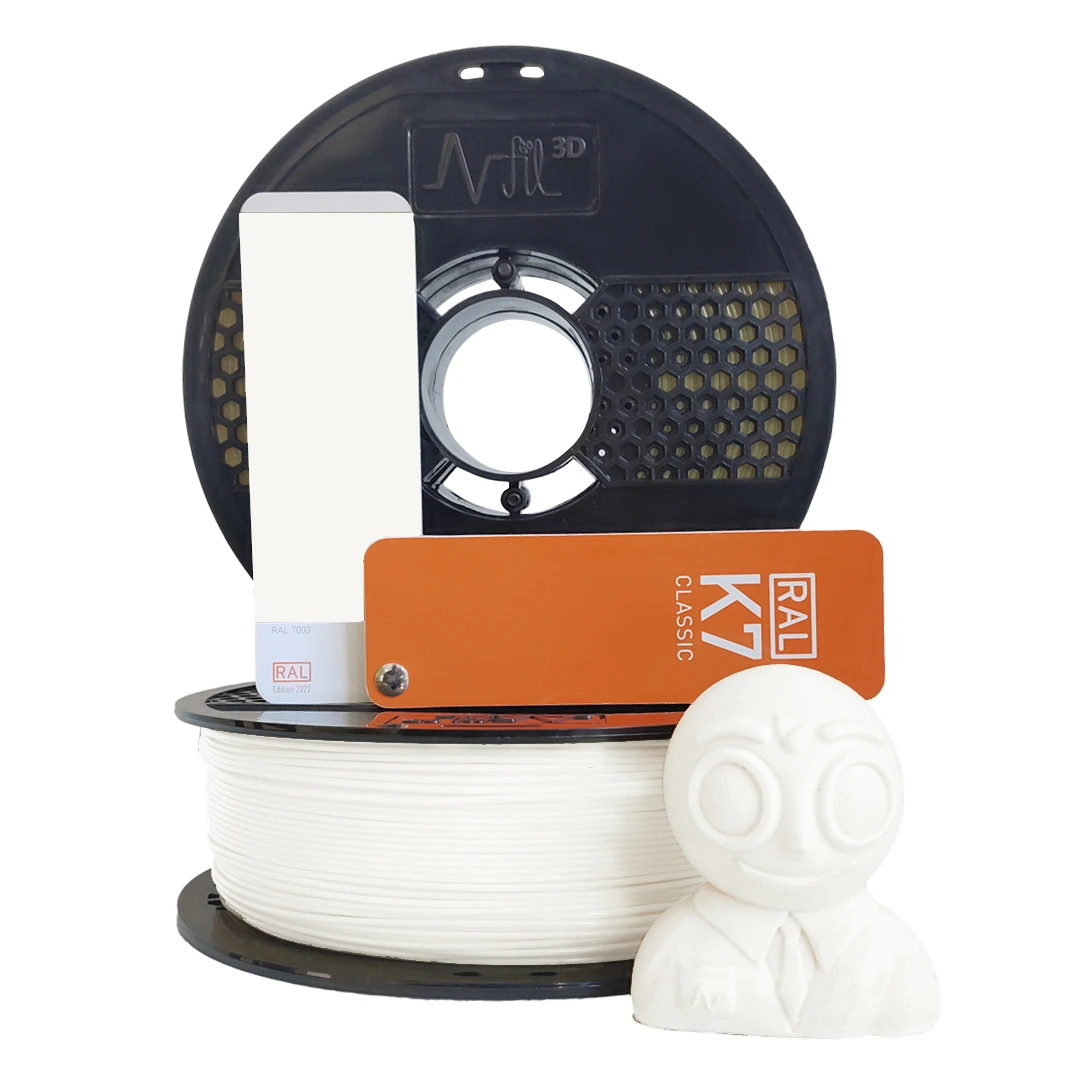
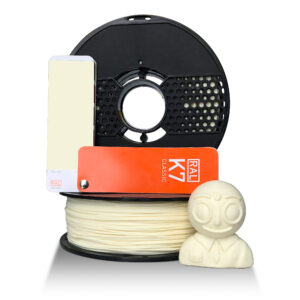
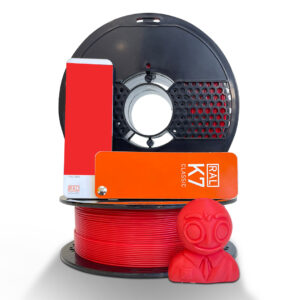
Turbo-Finish PLA+ Natural White by NFIL3D is a premium-quality 3D printing filament designed for makers, engineers, designers and professionals who need a clean white appearance, enhanced PLA+ strength and high-speed printing support. Its versatile Natural White colour is particularly suitable for architectural models, engineering prototypes, detailed figurines, product design samples and customized 3D printed accessories.
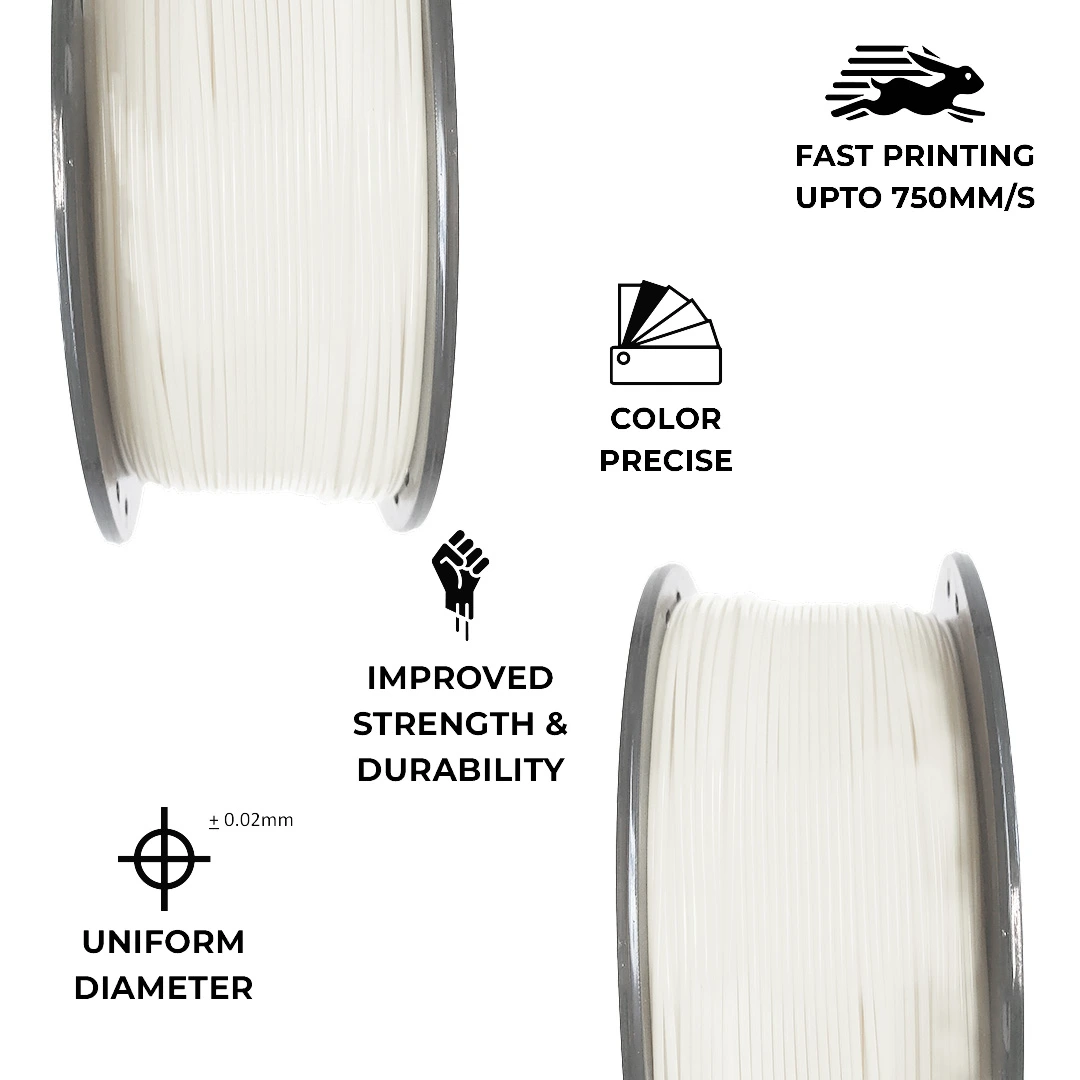
Developed using an enhanced PLA+ formulation, this filament is advertised to support printing speeds from 50mm/s to 750mm/s on compatible, appropriately configured FDM printers. It features a nominal diameter of 1.75mm and an advertised dimensional tolerance of ±0.015mm to support consistent filament feeding.
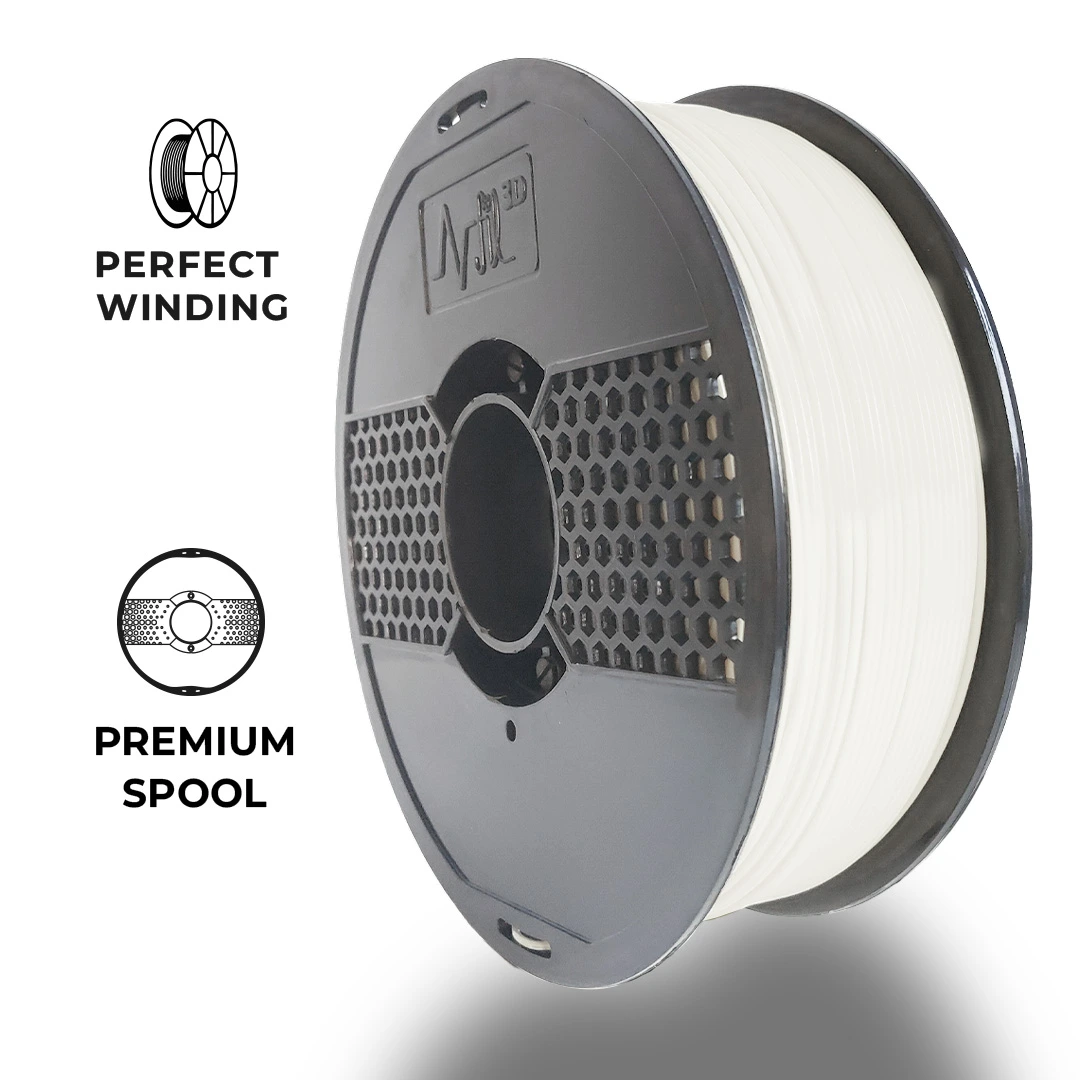
Every spool is specified to provide a full 1kg net weight of usable filament and includes two desiccants to help manage humidity during storage.
Why Choose Turbo-Finish PLA+ Natural White?
Turbo-Finish PLA+ Natural White brings together a versatile white colour, a precision-focused filament diameter and a formulation marketed for high-speed printing.
White is a useful filament colour because it allows designers to evaluate geometry, contours and surface details without distraction from saturated colours. It also works well as a base for models that will be sanded, primed or painted.
The Natural White shade suits architectural prototypes, scaled buildings, display models, customized accessories and educational objects.
The Turbo-Finish formulation is intended for users who want flexibility between ordinary printing speeds and faster printing profiles on suitably capable machines.
NFIL3D draws on more than 30 years of experience in polymer raw materials, additives and processing to support its filament manufacturing and material-development approach.
Key Features of Turbo-Finish PLA+ Natural White
1. High-Speed Printing Support from 50mm/s to 750mm/s
One of the main advertised advantages of Turbo-Finish PLA+ Natural White is its printing-speed support range of 50mm/s to 750mm/s.
The material is marketed for use in conventional FDM workflows as well as higher-speed applications on appropriately configured 3D printers.
Faster printing can be useful when creating multiple prototypes, repeated model components or design samples.
However, the advertised upper limit of 750mm/s does not mean that every printer can achieve reliable extrusion at that speed.
Actual performance depends on printer acceleration, motion-system capability, hotend melting capacity, nozzle size, volumetric flow rate, cooling and model geometry.
Fine details, bridges, overhangs and visible outer walls often require lower speeds for better print quality.
Users should start with a suitable material profile and gradually increase printing speed while checking extrusion consistency, layer adhesion and surface finish.
2. Versatile Natural White Colour
Turbo-Finish PLA+ Natural White features a clean white appearance suitable for both creative and professional 3D printing projects.
Natural White is useful for scaled buildings, model furniture, sculptures, product housings and presentation pieces.
The neutral colour can help emphasize shapes, curves, raised lettering and geometric details under suitable lighting.
It can also be combined with black, grey, blue or other filament colours in multi-part assemblies.
White filament is particularly useful for projects that require further painting or finishing.
The final shade and surface sheen depend on printing temperature, layer height, speed and lighting.
Natural White is the product’s colour designation. It should not automatically be assumed to have the same shade as separately named Snow White, Polar White or Ivory products.
3. Enhanced Strength Compared with Regular PLA
Turbo-Finish PLA+ Natural White uses an enhanced PLA+ formulation intended to provide higher strength than conventional PLA filament.
This makes it suitable for selected prototype housings, decorative components, organizers and lightweight accessories.
The material is designed for practical handling durability while retaining convenient PLA-based printing characteristics.
However, printed-part strength depends on model geometry, wall thickness, infill density, print orientation and layer bonding.
High-speed printing can affect finished-part strength if the printer cannot melt and deposit sufficient material.
Components intended for heavy loads, elevated temperatures or safety-critical applications should be evaluated before use.
4. Precision 1.75mm Diameter with ±0.015mm Tolerance
Turbo-Finish PLA+ Natural White has a nominal filament diameter of 1.75mm and an advertised diameter tolerance of ±0.015mm.
Consistent filament thickness is important for predictable extrusion because slicing software calculates material delivery using the filament diameter configured in the printer profile.
Significant diameter variations may contribute to under-extrusion, over-extrusion, irregular layer widths and visible surface defects.
NFIL3D emphasizes dimensional consistency as part of its filament manufacturing approach.
The advertised tolerance is intended to support consistent feeding through properly calibrated extrusion systems.
This value refers to filament diameter tolerance, not guaranteed dimensional accuracy of a finished 3D printed object.
5. Nozzle-Friendly PLA+ Formulation
Turbo-Finish PLA+ Natural White is designed for extrusion through compatible FDM and FFF printer hotends.
Its controlled filament dimensions and enhanced PLA+ formulation are intended to support reliable material flow under appropriate printing conditions.
A clean nozzle, correctly calibrated extruder and suitable temperature remain important for consistent printing.
For white objects, thorough nozzle purging is especially useful when switching from dark or strongly coloured filament.
At higher speeds, the hotend must melt enough material to meet the requested flow rate.
If the hotend cannot maintain adequate flow, under-extrusion, gaps or poor layer bonding may occur.
No filament can guarantee completely clog-free printing under every operating condition.
6. Moisture Management with Two Desiccants
Turbo-Finish PLA+ Natural White is supplied with two desiccants intended to help reduce humidity exposure during storage.
PLA-based filaments can absorb moisture from the surrounding environment over time.
Moisture-affected material may produce stringing, bubbling, inconsistent extrusion and unwanted surface defects.
The included desiccants support appropriate storage conditions but do not guarantee permanently moisture-free filament.
After opening the spool, store unused material inside a sealed protective bag or airtight container with suitable desiccant.
For additional technical information, read the Prusa Filament Drying and Storage Guide.
7. Full 1kg Net Filament Weight
Every spool of Turbo-Finish PLA+ Natural White is specified with a full 1kg net weight of usable 3D printing filament.
Net weight refers to the printing material itself, excluding the empty spool and external packaging.
This provides material for multiple smaller printing jobs or larger individual models.
Users can estimate filament consumption through their preferred slicing software before beginning a project.
Actual material usage depends on model size, wall thickness, infill density and support requirements.
8. Consistent Natural White Colour
Colour consistency matters when producing multiple printed components intended to form one model or assembly.
NFIL3D emphasizes controlled colour formulation to support a uniform Natural White appearance.
Turbo-Finish PLA+ Natural White can be used for matching architectural pieces, prototype components, miniature structures and decorative collections.
Using similar printing temperatures, layer heights and outer-wall speeds can also help maintain a consistent surface appearance across printing sessions.
9. Backed by 30+ Years of Polymer Expertise
NFIL3D draws on more than 30 years of experience in polymer raw materials, additives and material processing.
This background supports its focus on filament development, manufacturing consistency and controlled material dimensions.
Turbo-Finish Natural White brings these material priorities together with an understated colour and manufacturer-advertised high-speed printing support.
Applications of Turbo-Finish PLA+ Natural White
Architectural Models and Scale Buildings
Turbo-Finish PLA+ Natural White is suitable for miniature buildings, architectural facades, scaled furniture and design presentation models.
The white colour helps emphasize model geometry, structural details and proportions.
Product Prototypes and Design Samples
Create appearance prototypes, demonstration housings, conceptual products and physical design samples.
Compatible high-speed printers may help reduce production time when adequate flow and surface quality can be maintained.
Detailed Figurines and Miniature Sculptures
Print decorative figurines, sculptural busts, artistic models and collectible display pieces.
Natural White can serve as a starting point for painted miniatures and customized finishing.
Educational and STEM Projects
Create geometry examples, engineering demonstration models, classroom learning aids and design exercises.
Home and Office Accessories
Produce suitable pen holders, cable organizers, storage trays, decorative phone stands and personalized desk accessories.
Decorative and Creative Projects
Print geometric ornaments, display sculptures, decorative lettering and other creative objects.
Turbo-Finish PLA+ Natural White Technical Specifications
| Parameter | Specification |
|---|---|
| Product Name | Turbo-Finish PLA+ Natural White 1.75mm |
| Brand | NFIL3D |
| Material Type | Turbo-Finish PLA+ |
| Colour | Natural White |
| Nominal Filament Diameter | 1.75mm |
| Advertised Diameter Tolerance | ±0.015mm |
| Advertised Speed Support | 50–750mm/s, printer-dependent |
| Advertised Net Filament Weight | 1kg |
| Strength | Enhanced Compared with Regular PLA |
| Extrusion | Nozzle-Friendly PLA+ |
| Colour Quality | Consistent Natural White |
| Included Desiccants | 2 |
| Printing Technology | FDM / FFF |
| Applications | Architecture, Prototyping, Figurines, Education and DIY |
Recommended Printing Settings for Turbo-Finish PLA+
For dependable results with Turbo-Finish PLA+ Natural White, begin with a compatible PLA+ or high-speed PLA+ material profile and follow the manufacturer-recommended settings provided with the filament.
Nozzle Temperature: Use the temperature range recommended on the NFIL3D packaging or technical data sheet. Adjust within that range according to printer performance and material flow.
Bed Temperature: Select a suitable heated-bed setting and ensure the printing surface is clean.
Layer Height: A 0.20mm layer height is a practical starting point with a standard 0.4mm nozzle.
Printing Speed: Begin with a reliable speed supported by the printer, then increase gradually after checking extrusion and layer adhesion.
Outer-Wall Speed: Use controlled speeds for visible surfaces and fine details, even when internal areas are printed faster.
Maximum Volumetric Flow: Ensure the hotend can melt enough material for the selected line width, layer height and actual printing speed.
Acceleration: Select values appropriate for the printer’s motion system.
Part Cooling: Adjust cooling based on bridges, overhangs, layer time and bonding requirements.
Storage: Keep unused filament sealed in a dry environment with suitable desiccant.
Understanding Volumetric Flow at High Printing Speeds
When using Turbo-Finish PLA+ Natural White, it is important to match printing speed to the printer’s actual material-flow capacity.
The simplified calculation is:
Required Volumetric Flow = Line Width × Layer Height × Actual Printing Speed
For example, with a 0.45mm line width and a 0.20mm layer height:
| Actual Printing Speed | Approximate Required Flow |
|---|---|
| 100mm/s | 9mm³/s |
| 200mm/s | 18mm³/s |
| 300mm/s | 27mm³/s |
| 500mm/s | 45mm³/s |
| 750mm/s | 67.5mm³/s |
These are theoretical extrusion-demand calculations, not verified performance figures for a particular printer or filament.
A machine may not reach its configured maximum speed on short toolpaths because of acceleration limitations.
Users should select a speed that their printer can sustain while maintaining appropriate flow, cooling, layer bonding and surface quality.
Tips for Better Natural White 3D Prints
The final appearance and performance of Turbo-Finish PLA+ Natural White depend on material condition, printer calibration and slicing settings.
Before printing, thoroughly purge the nozzle if a dark or strongly coloured filament was used previously.
Residual pigments may create unwanted marks or discolouration in white models.
For detailed sculptures or architectural miniatures, smaller layer heights may reduce visible stepping on curved surfaces.
Maintain consistent outer-wall speeds to help produce uniform-looking visible surfaces.
Keep the printing area and build plate clean because white filament can show dark contamination.
For models requiring painting, test suitable sanding, priming and finishing methods on a small sample first.
When increasing print speed, monitor for under-extrusion, ringing, poor bridging and inadequate layer bonding.
If the hotend cannot maintain the required material flow, reduce speed or adjust the material profile within recommended operating limits.
Store unused filament in sealed packaging with suitable desiccant.
Frequently Asked Questions
What makes Turbo-Finish PLA+ Natural White different from regular PLA+?
Turbo-Finish PLA+ Natural White is marketed for a wider high-speed printing range than conventional printing profiles, depending on printer capability.
Can every printer reach 750mm/s?
No. Actual achievable speed depends on printer acceleration, motion capability, hotend flow, cooling and model geometry.
Is Natural White the same as Ivory or Snow White?
No. Natural White, Ivory and Snow White are separately named colour variants. Their final appearance should be compared using actual printed samples.
Is the filament suitable for FDM printers?
It is intended for compatible FDM and FFF 3D printers that accept 1.75mm PLA-based filament.
What does ±0.015mm mean?
It refers to the advertised tolerance of filament diameter, not guaranteed finished-model accuracy.
How should unused filament be stored?
Keep unused material in a sealed container or protective bag with suitable desiccant to reduce environmental humidity exposure.
Buy Turbo-Finish PLA+ Natural White at NFIL3D
Turbo-Finish PLA+ Natural White combines a clean white appearance with enhanced PLA+ formulation, consistent filament dimensions and high-speed printing support.
Its nominal 1.75mm diameter, advertised ±0.015mm tolerance, full 1kg specified net filament weight and two included desiccants make it a versatile option for compatible FDM printing projects.
Whether you are developing architectural models, detailed figurines, product prototypes, educational objects or customized accessories, Natural White provides a flexible colour for everyday 3D printing.
Explore the NFIL3D Turbo-Finish PLA+ Collection to discover additional colours including Army Green, Beige, Deep Blue, Electric Blue, Ivory, Midnight Grey and Mint Green.
Visit the NFIL3D 3D Printing Store to discover more filaments, printers and accessories.


Reviews
There are no reviews yet.