
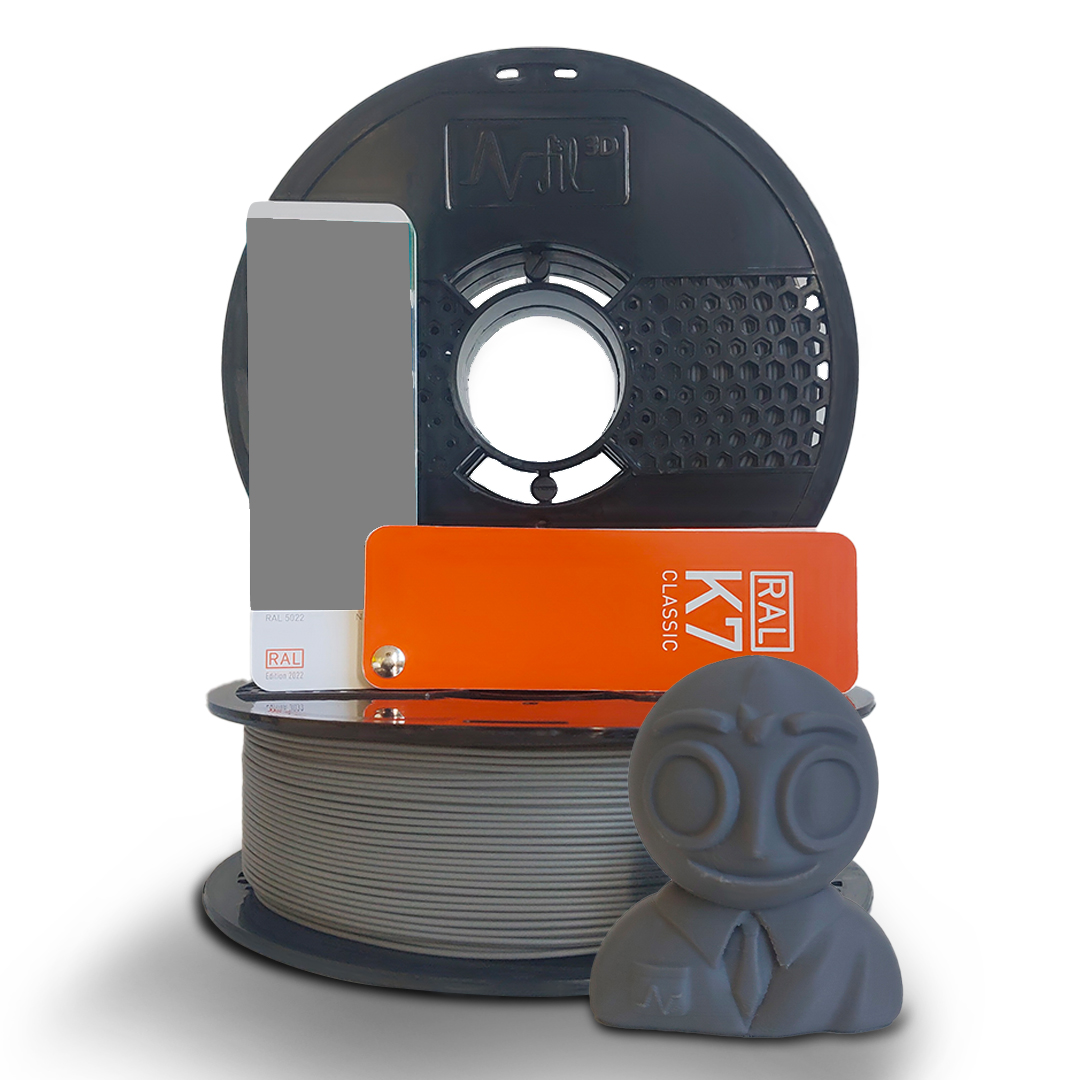
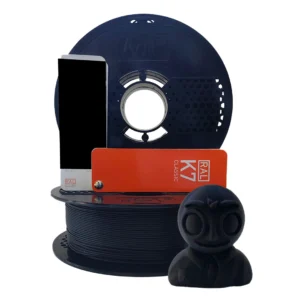
Ultra Light PLA+ Cement Grey by NFIL3D is a specialized lightweight PLA+ 3D printing filament developed for makers, designers, engineers and hobbyists who want to reduce the weight of suitable printed objects while maintaining useful structural performance. Its understated Cement Grey colour makes it an attractive choice for model aircraft concepts, RC accessories, decorative components, large display models, engineering prototypes and customized 3D printing projects.
As part of NFIL3D’s Ultra Light PLA+ range, this filament is intended for applications where material weight is an important design consideration. Compared with conventional filament selection, lightweight materials can offer opportunities to optimize printed mass, component geometry and material usage.
Actual weight reduction and strength depend on the filament’s formulation, the printed geometry and the selected processing conditions.
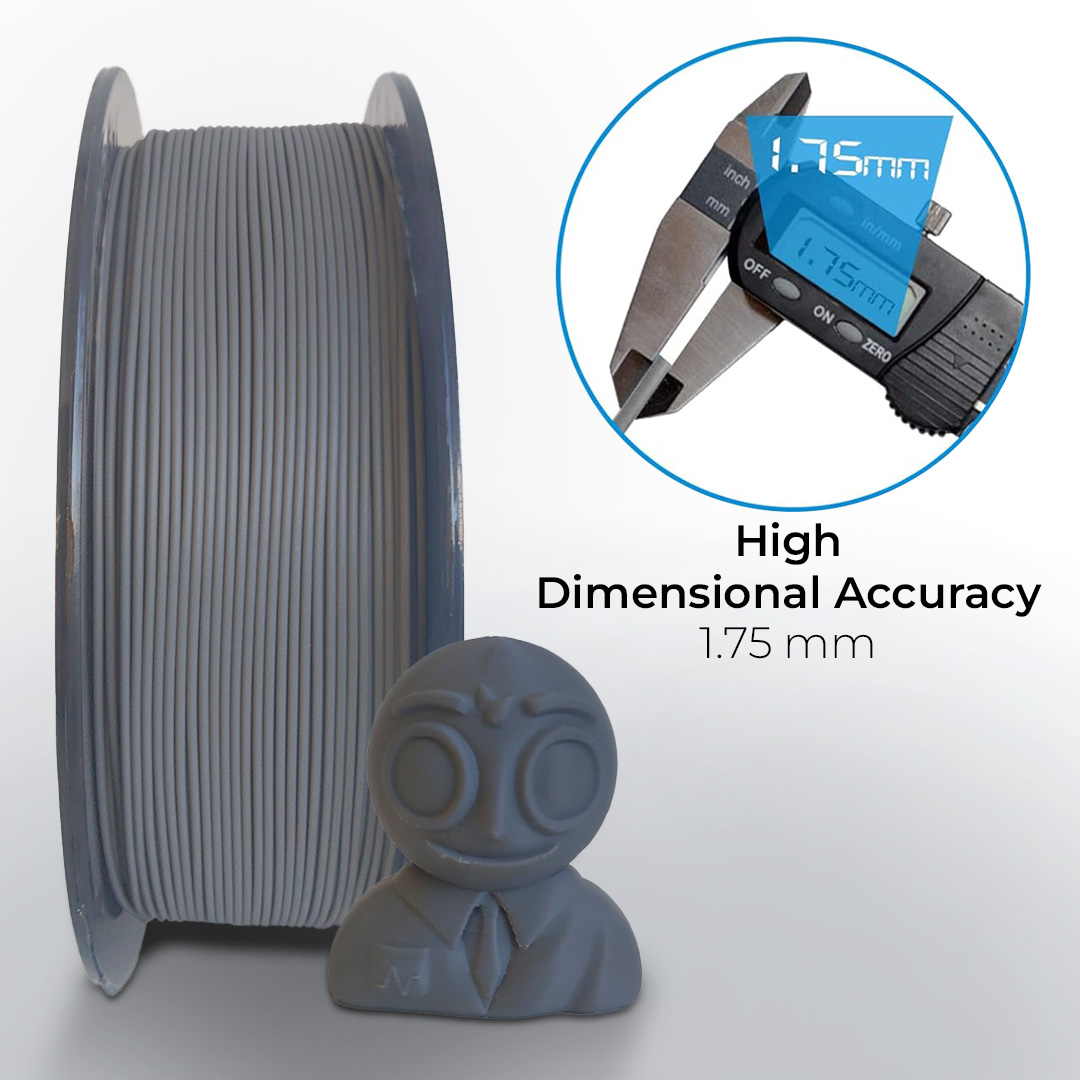
With a nominal diameter of 1.75mm, Ultra Light PLA+ Cement Grey is intended for compatible FDM and FFF 3D printers.
Why Choose Ultra Light PLA+ Cement Grey?
Ultra Light PLA+ Cement Grey offers a practical approach to weight-conscious 3D printing without sacrificing the visual versatility of a neutral grey colour.
For projects such as display aircraft, lightweight covers, large sculptures and decorative structures, reducing printed weight can be an important design objective.
A lighter printed component may be easier to transport, mount or incorporate into a larger assembly.
Its Cement Grey appearance is useful for industrial-style prototypes, architectural models and mechanical-looking display components.
Unlike NFIL3D’s regular PLA+ or Turbo-Finish PLA+ products, this variant is positioned around lightweight printing applications rather than a specific maximum printing-speed claim.
For designers, the ability to evaluate component weight alongside shape and strength can support better material selection during prototyping.
Key Features of Ultra Light PLA+ Cement Grey
1. Lightweight Material for Weight-Sensitive Applications
A key benefit of Ultra Light PLA+ Cement Grey is its lightweight-focused design.
Many 3D printing projects require careful control of component mass, particularly when developing model aircraft, large display structures and portable assemblies.
Lightweight filament can help designers explore reduced-mass parts without changing the entire manufacturing process.
The actual weight advantage depends on the material’s density and the printing settings used.
For an accurate comparison, print the same geometry using a suitable regular PLA+ reference and compare the finished weights.
A specific percentage reduction should only be advertised when supported by measured product data.
2. Designed for Strength-to-Weight Optimization
Ultra Light PLA+ Cement Grey is intended for printing applications where weight and strength must be considered together.
A useful strength-to-weight ratio can be valuable for prototype structures, model assemblies and lightweight decorative components.
However, a material being lighter does not automatically mean that it is stronger than regular PLA+.
The strength of a printed object depends on the actual material formulation, wall thickness, infill, print orientation and layer bonding.
Reducing weight too aggressively may make a part less stiff or less resistant to mechanical loads.
For this reason, users should test prototype components under realistic conditions before selecting them for demanding applications.
3. Cement Grey Colour for Professional Models
Ultra Light PLA+ Cement Grey features a neutral grey appearance suitable for industrial-inspired and architectural designs.
This colour is useful when creating model machinery, engineering mock-ups, miniature structures, urban dioramas and decorative accessories.
Cement Grey can complement black, white, orange and other colours in multi-part models.
Its understated appearance allows the shape and geometry of a printed model to remain the primary visual focus.
The final colour and surface finish may vary according to printing settings, material behaviour and lighting.
Cement Grey is a colour designation and does not mean that the filament contains cement, concrete or mineral fillers.
4. Suitable for Large Display Models
Lightweight-focused materials are particularly interesting for larger 3D printed objects.
Large sculptures, scale models and decorative structures can become heavy when produced with solid sections or excessive infill.
Ultra Light PLA+ Cement Grey allows users to explore weight-conscious designs using appropriate wall thickness, internal structure and material settings.
For larger models, controlling part mass may simplify handling, transportation and display installation.
Any suspended or mounted objects should use suitable mechanical supports and be evaluated for safety.
5. Potential for More Efficient Material Usage
Lightweight printing is about controlling the amount of material required to achieve a desired shape and function.
For some designs, optimized wall structures and lower-density material can reduce the mass of a completed print.
When a filament uses a specialized expansion mechanism, material flow may also need adjustment to achieve the intended dimensions and weight.
However, not every lightweight PLA+ formulation expands during extrusion.
Users should follow the specific NFIL3D technical data sheet before making significant changes to flow, temperature or wall settings.
Lower density alone does not guarantee faster printing.
6. Useful for Rapid Prototyping
Ultra Light PLA+ Cement Grey can be used for appearance prototypes, concept housings, model components and weight-sensitive design studies.
Rapid prototyping helps engineers and designers evaluate different shapes before committing to final production.
Lightweight material can be particularly useful when component mass is part of the design assessment.
For example, a designer may compare multiple shell geometries using the same printing material and evaluate the resulting weight, rigidity and surface finish.
Actual print time depends on machine capability, model geometry and slicing settings rather than material density alone.
7. Compatible with Appropriate FDM Printing Workflows
Ultra Light PLA+ Cement Grey is intended for compatible FDM and FFF printers that accept 1.75mm PLA-based filament.
Because lightweight PLA formulations can differ, a material-specific printing profile may be required.
Some lightweight PLA products are designed with an active foaming mechanism, while others use different approaches to lower density.
Users should confirm the NFIL3D product’s specific material behaviour before using settings intended for another manufacturer’s lightweight filament.
A clean nozzle, calibrated extruder and properly prepared print bed remain important for successful printing.
8. Controlled Filament Diameter and Colour
Consistent material feeding and colour appearance are important when producing reliable 3D printed components.
NFIL3D’s product listing advertises a nominal 1.75mm filament with a diameter tolerance of ±0.015mm.
This value describes filament diameter tolerance, not guaranteed dimensional accuracy of a finished part.
Consistent material dimensions can help support predictable extrusion when the printer is correctly calibrated.
9. Supported by Polymer Manufacturing Experience
NFIL3D draws on more than 30 years of experience in polymer materials, additives and processing.
This background supports the brand’s approach to filament development, material formulation and manufacturing consistency.
The Ultra Light PLA+ range extends its filament portfolio to applications where weight-conscious design is a priority.
Applications of Ultra Light PLA+ Cement Grey
RC Aircraft and Model Aviation
Ultra Light PLA+ Cement Grey can be evaluated for suitable model aircraft concepts, display wings, fuselage mock-ups and non-critical RC model components.
For flight applications, users should verify part mass, rigidity, impact resistance and relevant safety requirements before use.
Drone Prototypes and Lightweight Covers
Create appearance models, prototype covers and non-critical components where reduced weight may be beneficial.
Flight-critical or load-bearing drone components require appropriate engineering testing and material validation.
Architectural Models and Scale Structures
Print scaled buildings, miniature bridges, conceptual structures and presentation models.
Cement Grey is particularly suitable for urban and industrial architectural themes.
Cosplay and Costume Accessories
Produce suitable decorative armour pieces, prop housings and wearable display accessories where lower weight may improve comfort.
Wearable objects should be assessed for suitable fit, finishing and safe use.
Engineering Prototypes
Create lightweight conceptual parts, design samples, non-critical housings and product development models.
Decorative Sculptures and Large Display Objects
Produce geometric sculptures, decorative models, exhibition pieces and suitable display accessories.
Ultra Light PLA+ Cement Grey Technical Specifications
| Parameter | Specification |
|---|---|
| Product Name | Ultra Light PLA+ Cement Grey 1.75mm |
| Brand | NFIL3D |
| Material Category | Ultra Light PLA+ / PLA+LW |
| Colour | Cement Grey |
| Filament Diameter | 1.75mm |
| Advertised Diameter Tolerance | ±0.015mm |
| Printing Technology | FDM / FFF |
| Product Focus | Lightweight 3D Printing |
| Relative Density | Confirm from NFIL3D technical data sheet |
| Weight Reduction Percentage | Not specified |
| Foaming / Expansion Mechanism | Not confirmed |
| Recommended Printing Temperature | Follow NFIL3D product guidance |
| Strength-to-Weight Performance | Application-dependent; testing required |
| Suitable Applications | RC Models, Architecture, Prototyping, Cosplay and Decor |
Recommended Printing Settings for Ultra Light PLA+
Because Ultra Light PLA+ Cement Grey is a specialized material, its printing profile should be based on the actual NFIL3D formulation.
Nozzle Temperature: Follow the manufacturer-recommended temperature range. Do not assume that settings for another lightweight PLA product are suitable.
Bed Temperature: Use the recommended heated-bed setting and ensure that the print surface is clean.
Layer Height: With a standard 0.4mm nozzle, 0.20mm can be used as an initial calibration point if compatible with the material.
Printing Speed: Begin at a moderate, printer-supported speed and adjust according to test-print quality.
Flow Rate: Start with the recommended profile. Change flow only after checking whether the material expands and measuring the printed dimensions.
Wall Thickness: Choose sufficient walls to maintain the required strength while considering the overall weight.
Infill: Optimize infill density and pattern for the model’s purpose instead of automatically choosing the lowest setting.
Cooling: Adjust part cooling to balance overhang quality, surface appearance and layer bonding.
Retraction: Tune according to the filament’s actual extrusion behaviour.
Storage: Keep unused filament in sealed, dry storage.
Important Information About Lightweight PLA Behaviour
Different lightweight PLA formulations may behave differently during printing.
Some actively foam and expand when heated, requiring changes to temperature and extrusion flow.
Other lightweight filaments may not use the same heat-activated expansion process.
The correct settings for Ultra Light PLA+ Cement Grey therefore depend on its specific formulation.
Do not automatically copy aggressive foaming settings from another manufacturer’s filament.
Tips for Better Lightweight 3D Prints
For dependable results with Ultra Light PLA+ Cement Grey, begin with a small calibration model.
Measure the weight of the printed object and compare it with the slicer’s estimate.
If possible, print the same model in conventional PLA+ to understand the actual weight difference.
Check dimensional accuracy, surface quality and layer bonding before producing a larger object.
For model aircraft or thin-walled designs, evaluate wall thickness and structural rigidity rather than reducing infill indiscriminately.
When printing larger decorative parts, use suitable supports and maintain good first-layer adhesion.
For prototypes with mechanical requirements, test the finished part under realistic loading.
If the filament shows unusual expansion, oozing or stringing, consult NFIL3D’s material-specific recommendations before adjusting flow or temperature.
Store unused material in a dry, sealed environment to reduce moisture exposure.
Frequently Asked Questions
What is Ultra Light PLA+ Cement Grey?
Ultra Light PLA+ Cement Grey is an NFIL3D filament positioned for lightweight 3D printing applications, with a neutral Cement Grey colour and nominal 1.75mm diameter.
Is Ultra Light PLA+ lighter than regular PLA+?
It is marketed for reduced-weight applications. The actual weight reduction should be confirmed through the product’s density specification or comparative printed-part testing.
Does this filament expand or foam when heated?
The available product information does not confirm the specific expansion mechanism. Check NFIL3D’s technical data sheet before using active-foaming print profiles.
Is this filament stronger than regular PLA?
The old product description highlights strength-to-weight benefits, but does not provide mechanical test results. Strength should be evaluated for the intended application.
Can it be used for RC aircraft?
It can be evaluated for suitable model aircraft parts and prototypes. Flight-use components require appropriate material validation and structural testing.
Does lightweight PLA always print faster?
No. Lower material density does not automatically reduce printing time. Actual print speed depends on material behaviour, nozzle flow, printer capabilities and slicing settings.
Is Cement Grey the same as regular PLA+ Cement Grey?
No. Ultra Light PLA+ Cement Grey belongs to the lightweight-focused range, while regular PLA+ Cement Grey is a separate product.
Explore Ultra Light PLA+ at NFIL3D
Ultra Light PLA+ Cement Grey offers a lightweight-focused 3D printing option for makers who want to explore reduced-mass prototypes, architectural models, decorative parts and creative applications.
Its Cement Grey appearance is suitable for industrial-style designs, conceptual models and modern display pieces.
Explore the NFIL3D Ultra Light PLA+ Collection to discover Cement Grey and other available colours.
For general technical information about lightweight PLA materials, read Prusa’s Lightweight PLA Guide. It explains how active-foaming materials behave, although those settings should not be assumed to apply directly to NFIL3D’s formulation.
Visit the NFIL3D Store to explore more 3D printer filaments, printers and accessories.


Reviews
There are no reviews yet.